I've sat here with the same blinking cursor for a couple days now. Film Muse posts usually just spill out of me, but this one is different. How could I ever begin to write a cohesive intro doing justice to one of the most important teenage films known to date? Every line I write sounds cheesy and sensational - as genuine as I am.
Palo Alto: the ultimate mood piece of 21st century adolescents.
I walked into the Uptown Theatre alone the day Palo Alto premiered. As I sat in the awkwardly brand new (and squeaky) leather seats, I looked around me: a couple old dudes (hungry for a Coppola film? Tantalized by Franco's perverted storyline? I'll never know) and a teenage girl with her mother peppered the seats. As I sat there waiting for it to begin, I thought about all the expectations I had for the film.
I remembered first hearing buzz about Gia Coppola last year, who was set to debut her first feature film at the Venice Film Festival in September of 2013. I had read Franco's short stories before - often crude and cumbersome with weird teenage slang, yet surprisingly housed deeply emotional characters. When I heard that Gia was adapting his work I was so hopeful. I feel like I can speak for so many of my fellow film addicts when I say that I couldn't wait for another Coppola film. The Bling Ring left a gaping whole in my heart when it came out. I was hoping for a delicate Virgin Suicides take on pop culture and got Paris Hilton pillows. I know it wasn't fair of me to project my yearning for hazy and innocent adolescent stories onto Sofia's new work, but it hit me hard when I walked out of the theatre.
Where was the film that said something for the rest of us? That explained the indescribable growing pains that high schoolers endure? The Trip Fontaines, the neighborhood boys, and the prom fruit punch?
All I can say is that Palo Alto was worth the wait.
Cue the opening scene:
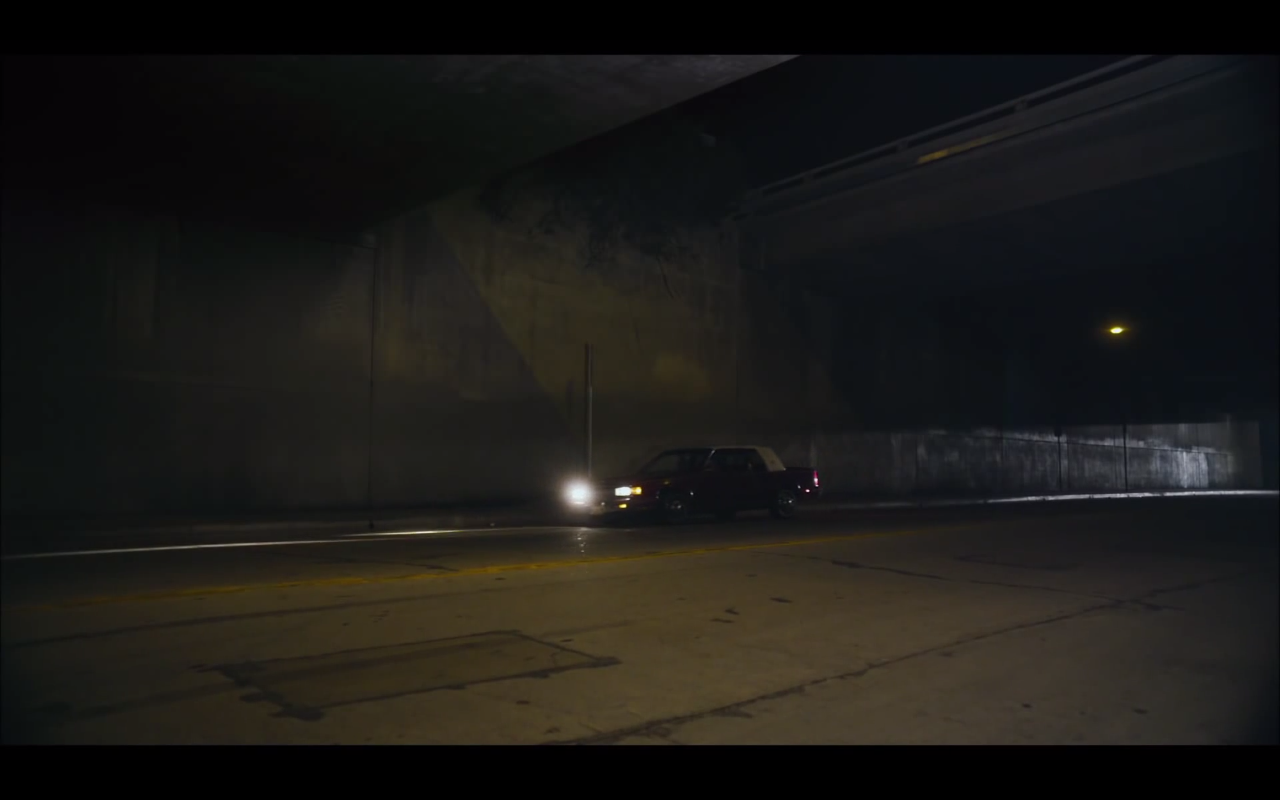
A slow crop zoom centers in on a glowing beat up car. Two teens Teddy and Fred sit inside, taking hits and sipping on paper bag booze. As they talk, one of Fred's signature scenarios comes up.
Fred: "If you were in the olden times...who'd you be?"
Teddy: "I'd be the king."
Fred: "No, you can't be the king, dog, no way! 'Cause I'm the king around these parts!"
Fred thrusts his foot forward on the gas pedal, slamming the car into a cement wall. As Fred psychotically screams from his power trip, pounding the steering wheel - Teddy stares forward, stunned, checking for blood on his brow. That is the beginning of Palo Alto.


The hazy world of the California suburbs sinks in immediately, thanks to Autumn Durald's cinematography. Stephen Shore's bland run down settings paint the scene while Patrick Joust's long exposure glowing lights illuminate the night. Teddy seems shy and unstated, peach fuzz lines his face. Fred on the other hand is so severe, you want to either love him or hate him. He has the arrogance of a chauvinistic asshole but somehow manages to charm the viewer with his impromptu piano solos and hilarious one liners ("fuckin' baaaaaked-"). The two act like yin yang twins, one dark the other light. Fred seems to envy Teddy a bit because he doesn't try that hard for others to like him. The teens wander around aimlessly, party hopping, waiting for something.


April (Emma Roberts) wears a shapeless yellow sweater during soccer practice and takes a cigarette break - pretending like she's a brooding 1920s film star. Her room (Gia Coppola's preserved teenage room) is decorated with a mix of childhood items and older interests. I immediately spotted a Strokes album insert spread out and tacked on the wall. A Virgin Suicides poster is tacked up as well, conspicuously blended in for only true Coppola fans to discover (I see you, girl). Playful stickers decorate April's laptop, plain sheets line the bed. I liked the appreciation to detail in the bedroom scenes (Emily/Teddy) because they are so clearly reflective of their identities, like most teenage bedrooms.
Then there are the parents. The parents of this film are hauntingly detached from their children. April's stepdad (Val Kilmer) lights up a cashed bowl while playing Grand Theft Auto, her mom (Gia Coppola's real mother, Jacqui Getty) puffs on a trendy E-Cig (never forget the year of the E-Cig) while on the phone with her friends. April often sees them at a distance through hallway doors, rarely interacting. But the portrayal of the parents doesn't seem to be so much of a commentary on negative parenting. I can just see the headline now --> PALTO ALTO: WHY PARENTS SHOULD WATCH THEIR TEENS MORE! We uncommonly see April's parents from her perspective: as actual human beings. I know what that feels like. It's sort of a melancholy time in life when you realize that your parents have lives and personal problems of their own. You sort of grow out of those protector/protectee roles that were instilled in you when you were a kid. It's also a bit sad when you come to that realization when they still don't think you have. Wise beyond their supposed years - the teens in Palo Alto seek intimacy elsewhere.


Teddy and April's encounters hit me so hard, I don't really know why. Was it their genuine acting? The way the camera lingers on their yearning faces? The viewer right away learns of Teddy's infatuation with April, much to Fred's annoyance. He looks at her longingly as she gets pulled away by her friends at a house party. It reminded me a bit of those voyeuristic boys in The Virgin Suicides - but much sweeter. As Teddy walks through the crowded house, he maintains his cool. Friends pat him on the back through the hallways, taking gulps from their parent's liquor bottles. Kids sit down and start playing "Never Have I Ever", singling out the more adventurous girls. The party scene is all too familiar, yet not too glamorized. We all know the underlying feeling at these kind of events: when you're at a party with your friends but you really only want to be with that one special person. The whole night feels like a delicate yet volatile game of booze, bud, and bad decisions.


As Teddy projectile vomits onto a fence, the "class floozy" Emily (Zoe Levin) steps in and offers to lead him upstairs to get mouthwash. Meanwhile, April sits in the living room soberly holding a decorative red cup. A boy tries to coax her into conversation, but it's clear that someone else is on her mind. Then we see Emily hand in hand with Teddy going upstairs and our stomachs turn into knots while watching April's pained yet subtle reaction. It's like getting the wind knocked out of you. This scene is so important because it perfectly explains how even the smallest actions can seem monumental - especially at that time in life. We watch April take the hit and try to recover by taking shots and later making out with the former couch boy.


As we cut to Emily going down on Teddy it's odd because the viewer doesn't really hate her for it. From previous scenes, she seems nice and maybe even picked on a little. She seems fully aware of her behavior, but also a little sad as the camera closes in on her dulled eyes. For a second it seems as if she is taking advantage of Teddy, although it is unclear. Later, we cut to Emily taking a swig of mouthwash in the parents' bathroom and Teddy leaving in the background reflection, saying nothing. She looks tired, sober. As she stares at herself in the mirror, we realize how complex all of these characters are. It's the least selfish approach to telling a story, and it's wonderful.
Then there is Mr. B (James Franco). It is clear from the beginning that he is stunted in some way. As he coaches the girls soccer team, he stops April after to complain about how he has to go on a date, asking her to babysit his kid. He is perfectly handsome, but something isn't right.
Mr. B is such an interesting character study. He comes across a bit predatory, and also a bit pathetic. He tells stupid jokes that even April doesn't seem to think are too funny, yet she is so flattered by his attention that she doesn't know what to do. I guess that is the creepiest part of all: April seems more mature than Mr. B, but he knows how to manipulate her more and that is where he leads.
As Mr. B offers to help April with her homework, she plays on her phone like a regular 16 year old girl. Out of nowhere he kisses her passionately, she shyly gives him a peck back. As their hidden relationship progresses, things get a bit stranger between the two. April tries to deal with Mr. B's aloofness during practice, tying other girls' shoes, giving pinnies to other players. The smallest actions eat April up, naturally. As she starts to process the whole ordeal and back out, Mr. B becomes eerily short with her.


During the soccer game, the camera zooms in and out as April misses the goal. The driving score ("Big Game") by Devonté Hynes pumps life into the scene and then fades out into a gloomy synth as the team begins to lose. Sparkling gold glitter gleams upon April's sweat ridden cheeks as she desperately looks at Mr. B, he looks away- disappointed. After the game, he consoles one of her pretty teammates, triggering April to do something drastic to get his attention back. She angrily accepts an offer back to his place after the game. His son is at his mother's house. She knows what will happen, but she goes anyways.
As April loses her virginity, Mr. B's shadow ominously covers her face.
I can't tell you how much I loved the way Gia and Amy portrayed Mr. B and April's relationship. I mean, it's clear that Gia didn't want to project digestible judgment onto these characters, but I can't help but see clues in Franco's acting. It's like solving a puzzle. Mr. B is obviously emotionally stunted and can't relate to women his own age, but he also is mildly controlling. BUT the beauty of it is that we can't see what his character does or thinks about in his spare time, because we mainly focus on April's perspective. I mean - this could have been a completely different movie about a perverted soccer coach, but it wasn't. How many times have we ourselves brushed upon turbulent situations like this? And how bizarre is it when it all comes crashing down? As if we were blind in the beginning?
I know so many people salivate when given the opportunity to call James Franco out on multiple things and hey- that's valid. But when I read what he said about who his character was based on things became a little more interesting:
"My character Mr. B was inspired by a real guy who had been my teacher. A decade after we graduated, the girl who April is based on, had never told anybody that she'd had a relationship with him, went back and had him arrested. He went to prison."
When Mr. B's kid and April play a video game, she chooses the female character. "She sucks" he says. "Trust me, I've played her". As she announces that she doesn't care as the two buff and sexualized animations begin to fight to the death. The female character is smacked to the ground, blood splattering everywhere. April doesn't know what to press - and the little kid wont tell her. He wins.
"Two cookies, please!", he says.
It is then revealed how a different babysitter rewards him for winning the game, exposing Mr. B's infidelities with one of April's teammates. I thought this scene was amazingly brilliant. April storms into the kitchen and throws the bag of cookies at the kid. This whole time she was getting played - just like that video game character. She never had a chance. At first she seems riled up, confronting Mr. B. He lamely makes an attempt to keep up their relationship, telling her that he loves her. She gets out of the situation, but not without emotional scars.
As April defeatedly slumps down in the bathroom stall, off somewhere else is Teddy completing his community service for a DUI. The two seem like star crossed lovers that were destined to be together, but had to endure terrible situations before they could experience their own love.
It's sad, because it's so true. Missed connections in adolescents. When you care about someone so much but you don't know how to tell them. When you are ignored and destructively act out to spite others. When every little problem seems like the end of the world. I'm not saying you lose that when you grow up - but I think it becomes masked. We assume that that is just how life is, and the innocence of experiencing love and rejection gets numbed over. These characters are not without faults, they are raw.


Emily and Fred's relationship is almost even darker. One of Franco's short stories about the gangbang of a high school girl is included into their story line. Emily becomes infatuated with Fred, falling for his boyish behavior even when he hurts her. The two walk out into the garden, a montage of Fred's perspective of Emily: fun, flirty, beautiful, broken. Fred voice over explains how he got her drunk and shared her with his friends as Emily looks into the camera with dead eyes. Fred's voice is monotone, apathetic.
Themes of sexuality and power dynamics shine strongly. Teddy shares a blunt with Fred's father, and proceeds to be hit on by him. Although this was an improvisation done by Chris Messina, it eerily fits the predatory tone of this film. Not so much that adults can't be trusted and are irresponsible, but that they are complex individuals as well - breaking the mold of traditional younger/older relationships.
As Fred progressively becomes more possessive over Emily, drunkenly dragging her into a pool, she finally stands up for herself. It was a great and freeing moment. She smacks the whisky bottle across Fred's head - stunned at herself. He looks up at her like a whimpering dog, and then runs away. Later, we see Emily sitting on the edge of the pool smoking a cigarette, laughing.
As Teddy and April finally come together towards the end of the film, everything seems to fall into place. As she watches him skateboard in a parking lot, he stares back fervently. Music swells. Then Fred whizzes back into the frame in his car out of nowhere, desperate for weed and looking to pick up. The two lovestruck teens separate, satisfied for once it seems. Happy.
Fred goes into this eery trance, nonsensically talking about sexual power dynamics. We see the most immature character of the film talk about the most challenging topics that even most adults won't face: who takes and who gives? Who truly holds the cards? Fred's thought process finally comes full circle. Irritating and charming, Fred's entire existence was about proving himself and his masculinity, until it all falls apart at the end. His beliefs are challenged by the one person he cares the most about, and it stings.
Is Fred questioning the way we are taught to perceive sexuality? Does Fred act out so harshly because he is confronted with the possibility of him being homosexual? Or (okay - this might be a stretch), could Fred have experienced some type of trauma regarding his sexuality in the past? His father? I mean - I haven't seen a character zone out like that since Gregg Araki's Mysterious Skin when Brady Corbet's character goes into a fabricated trance to mask childhood sexual abuse he endured.


As Teddy dreamily walks through the park lights, texting April, Fred drives down the tunnel of hell. He floors the gas pedal repeating "I'm not Bob". It is so haunting. As soon as Teddy gets dealt a good hand of cards, Fred's ultimate demise catches up with him. I can't explain how eery the ending was. On one hand you feel giddy as April sits on her stoop, smoking her last lucky cigarette, all the while Fred is heading somewhere catastrophic. Everyone's feelings are so extremely personified it's hard to take it all in. Much like adolescence, I suppose.
Everyone did such a spectacular job at acting. I don't know exactly what it was, but I have such a whole new respect for filmmaking after watching Palo Alto. Maybe it was the fact that I had been following this project for a while and was happy to see that it exceeded. Either way, I found hope for the sharing of these kind of stories in this industry. Palo Alto was incredibly fresh. Emma Roberts, Zoe Levin, Nat Wolff, and Jack Kilmer are all on my radar. Especially Nat Wolff (yeah, that little fucker from The Naked Brothers Band, what- you thought I forgot about "Crazy Car"?). I think they all brought such insight to characters that easily could have been type casted by quirky 25 year old actors. Perhaps it was Jack's lack of acting that gave the film an overall tone of sincerity. He seemed so beautifully careful and a bit insecure with some of his lines, which just contributed to his character even further. And Franco, fuckin Franco. Give him all the shit you want, but I've been hooked on his stuff since Spring Breakers.

And then there is Gia Coppola and Autumn Durald. They seem like such a great pair who are constantly learning and emerging from their work. I know I referenced Sofia Coppola's own work a lot in this post, and I hope that doesn't seem like I automatically glorify Gia for her relation. Let me clarify that Palo Alto would still stand alone. Gia did a great job of studying her mentors and past films (Dazed and Confused?) to create a beautiful rendition of teenage growing pains. It makes me really excited for the film industry, for women in the industry. Autumn made me want to look more into photography, to start considering the cinematographer as a bigger contributor than they are often represented.
Overall, Palo Alto has easily become one of my top favorite films. Sure, there are hiccups and continuity errors like any other film, but I don't think that should lessen it in any way. Palo Alto speaks to so many different levels of me personally, and to see that on the big screen at this time in my life makes me have hope for things in the future.
So cheers to the Palo Alto cast and crew, keep on keepin' on.
-Lauren Rose
Curbside Fashion
(P.S. s/o to Dev Hynes & Robert Schwartzman for an awesome soundtrack/score)
(P.P.S. I made a playlist for yall)
TEENAGE BLUES TUNES
~~~~~~~~~~~~~~~~~~~~~~~~~~
Love Is a Battlefield (cover) - Halloween, Alaska (spotify y'all)